
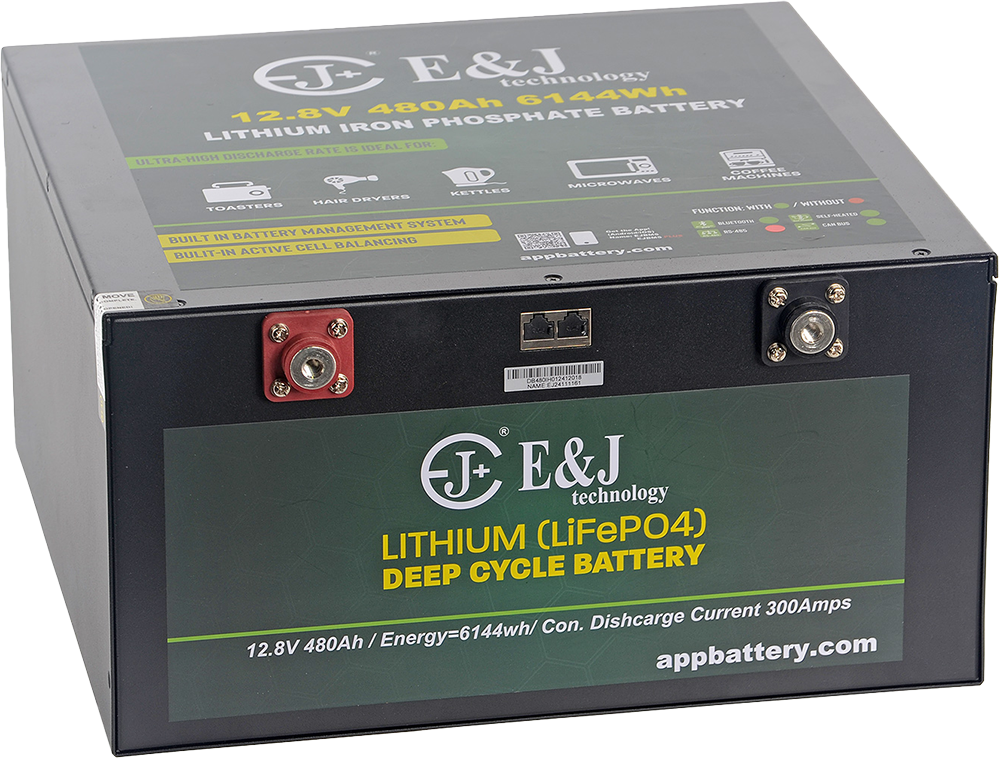
E&J Lithium 12V 480Ah Heat - BT
€3,615.60 per EJ12480HBT
- For large quantities - ask for quotation
- sales@etronix.se
- BrandE&J
Description
Article no.: BAT-EJ12480HBT
A high capacity Lithium battery 12,8V 480Ah LiFePO4 – RS485, Bluetooth & heating function.
RS485 Communication
Can be integrated with the vehicle power system, equipped with two RJ45 ports.
Active balancing for longer life
A built-in automatic balancing function ensures that all cells in the battery have the same voltage level. The function is activated at the end of the charging process and ensures smooth operation and optimal capacity over time, without compromising performance.
Calibration of BMS – for correct data and function
Before first use and after extended storage, it is important to calibrate the battery's BMS (Battery Management System). Follow these steps:
Fully charge the battery before use and leave the charger on for approximately 3-4 hours after full charge. During this process, the battery may occasionally pause and resume charging until all cells are balanced. Only after a full charge and balancing will the BMS be correctly calibrated, resulting in the app showing the correct value. Note: At the first start-up, the app may show low capacity, which is completely normal. The battery is supplied at 30% capacity and is not deeply discharged. After longer storage, for example in winter, the BMS must be recalibrated. In motorhomes and caravans, there are small, continuous power drains that can discharge the battery over time without being detected. This can mean that the app shows, for example, 80%, even if the battery is discharged. In this case, repeat the section Calibration of the BMS.
Heat function – Charging even in cold
This battery is equipped with an automatic heating function that is activated when the temperature drops below 0°C and a charger is connected. The heating will continue until the battery cells reach 5°C, after which charging will start. The heating is done without affecting the discharge and is driven by the charging current and not by the capacity of the battery itself. Note: A charging current of at least 12A is required for the heating to work properly.
The battery is optimized for operation even at temperatures down to -20°C.
Specifications
Battery chemistry: LiFePO4
Recommended charging current: 50 A
Maximum charging current: 200 A
Recommended charging voltage: 14.4 - 14.6 V
Additional charging voltage: 14.2 - 14.6 V
Recommended maintenance voltage (Float): 13.8 V
Supplied maintenance voltage (Float): 13.6 - 13.8 V
Maximum continuous discharge current: 200 A (300 A for 20 minutes)
Operating temperature: -30 °C to 60 °C
Charging temperature: -30 °C to 60 °C
Storage temperature: -30 °C to 60 °C
Recommended storage temperature: 15 °C to 30 °C
To consider when installing
Generator use:
Lithium batteries require common components. Use Victron DC-DC charger or Wakespeed regulator to protect the generator, battery and optimize charging.
Chargers:
Only chargers suitable for lithium batteries should be used. Make sure that the charger does not have functions such as Desulfation or Equalize Charge that can raise the voltage to 15 or 16V, which can damage the battery. Additional charging voltage: 14.2 – 14.6 V.
Solar cell controller:
Victron MPPT is recommended. If another regulator is used, make sure it can be set correctly for lithium.
How to store your lithium battery correctly
Charge to 100% before storage:
Sure that the cells are balanced and charged for less downtime.
Discharge to 80%:
Reduces stress on cells during storage.
Disconnect the battery completely:
Use a battery disconnector or disconnect the negative terminal. Some systems draw power even when the main power switch is off.
Charge after three months:
Charge to 100%, then discharge to 80% for continued proper storage.
Charging after winter storage:
Fully charge the battery before use and leave the charger on for about 3-4 hours after full charge. During this process, the battery may occasionally pause and resume charging until all cells are balanced. Only after a full charge and balancing will the BMS be correctly calibrated, allowing the app to display the correct value.
RS485 Communication
Can be integrated with the vehicle power system, equipped with two RJ45 ports.
Active balancing for longer life
A built-in automatic balancing function ensures that all cells in the battery have the same voltage level. The function is activated at the end of the charging process and ensures smooth operation and optimal capacity over time, without compromising performance.
Calibration of BMS – for correct data and function
Before first use and after extended storage, it is important to calibrate the battery's BMS (Battery Management System). Follow these steps:
Fully charge the battery before use and leave the charger on for approximately 3-4 hours after full charge. During this process, the battery may occasionally pause and resume charging until all cells are balanced. Only after a full charge and balancing will the BMS be correctly calibrated, resulting in the app showing the correct value. Note: At the first start-up, the app may show low capacity, which is completely normal. The battery is supplied at 30% capacity and is not deeply discharged. After longer storage, for example in winter, the BMS must be recalibrated. In motorhomes and caravans, there are small, continuous power drains that can discharge the battery over time without being detected. This can mean that the app shows, for example, 80%, even if the battery is discharged. In this case, repeat the section Calibration of the BMS.
Heat function – Charging even in cold
This battery is equipped with an automatic heating function that is activated when the temperature drops below 0°C and a charger is connected. The heating will continue until the battery cells reach 5°C, after which charging will start. The heating is done without affecting the discharge and is driven by the charging current and not by the capacity of the battery itself. Note: A charging current of at least 12A is required for the heating to work properly.
The battery is optimized for operation even at temperatures down to -20°C.
Specifications
Battery chemistry: LiFePO4
Recommended charging current: 50 A
Maximum charging current: 200 A
Recommended charging voltage: 14.4 - 14.6 V
Additional charging voltage: 14.2 - 14.6 V
Recommended maintenance voltage (Float): 13.8 V
Supplied maintenance voltage (Float): 13.6 - 13.8 V
Maximum continuous discharge current: 200 A (300 A for 20 minutes)
Operating temperature: -30 °C to 60 °C
Charging temperature: -30 °C to 60 °C
Storage temperature: -30 °C to 60 °C
Recommended storage temperature: 15 °C to 30 °C
To consider when installing
Generator use:
Lithium batteries require common components. Use Victron DC-DC charger or Wakespeed regulator to protect the generator, battery and optimize charging.
Chargers:
Only chargers suitable for lithium batteries should be used. Make sure that the charger does not have functions such as Desulfation or Equalize Charge that can raise the voltage to 15 or 16V, which can damage the battery. Additional charging voltage: 14.2 – 14.6 V.
Solar cell controller:
Victron MPPT is recommended. If another regulator is used, make sure it can be set correctly for lithium.
How to store your lithium battery correctly
Charge to 100% before storage:
Sure that the cells are balanced and charged for less downtime.
Discharge to 80%:
Reduces stress on cells during storage.
Disconnect the battery completely:
Use a battery disconnector or disconnect the negative terminal. Some systems draw power even when the main power switch is off.
Charge after three months:
Charge to 100%, then discharge to 80% for continued proper storage.
Charging after winter storage:
Fully charge the battery before use and leave the charger on for about 3-4 hours after full charge. During this process, the battery may occasionally pause and resume charging until all cells are balanced. Only after a full charge and balancing will the BMS be correctly calibrated, allowing the app to display the correct value.