
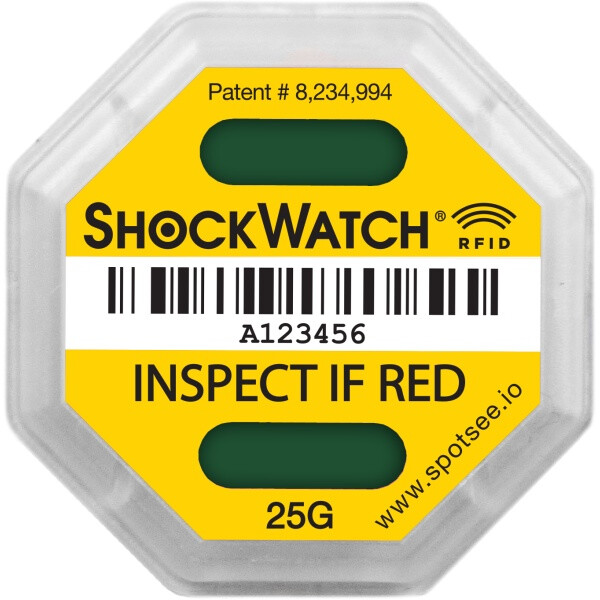
ShockWatch RFID 25G, yellow
- For large quantities - ask for quotation
- sales@etronix.se
- SKU79SWRFID25
Description
Article no.: TCI-79SWRFID25
ShockWatch RFID 25g
The ShockWatch RFID tag is an important addition to supply chain management as it prevents damaged goods from finding their way through the supply chain. To use it, simply select the appropriate impact threshold and attach the ShockWatch RFID tag. Each time a package or asset is scanned with an RFID reader, its condition is automatically entered into the Enterprise Resource Planning (ERP) software or Warehouse Management System. It is no longer necessary to actually see the indicator as the information is automatically transferred to the system.
RFID stands for Radio Frequency Identification and is a technology that makes it possible to transmit data via radio frequencies. It consists of two components: The RFID tag and the RFID reader. The RFID tag is a small, inexpensive device that is attached to an object and contains data. The RFID reader emits a radio frequency signal that activates the RFID tag and transmits the data. This usually takes place without direct visual contact and can be done at a short distance.
By combining traditional RFID inventory management with damage monitoring, you can use your existing ultra-high-frequency (UHF) RFID infrastructure to prevent, detect and diagnose damage along the supply chain or during storage.
The ShockWatch RFID uses RFID and analog technology in parallel. This enables analog reading as well as digital condition recording. The possibility of bulk recording speeds up and simplifies goods receipt. The status of the indicators can be displayed quickly and clearly thanks to the ERP connection.
The connection of RFID damage indicators directly into Enterprise Resource Planning (ERP) - by simply adapting the existing RFID software or warehouse management applications - offers three advantages:
1. automatic identification
Goods that require a damage check are automatically displayed in the ERP system when goods are received.
2. assignment of responsibilities
By documenting indicators in transit and in the warehouse, sources of damage can be identified and eliminated.
3. automation of reports
It is no longer necessary to visibly recognize the indicator. At goods receipt, the ERP or Warehouse Management System shows whether an indicator has been triggered.
Monitoring parcels during transportation or storage with SpotSee can reduce damage by 40-60%.
Using and choosing the right ShockWatch indicator
Choosing the right indicator: To ensure that the Shockwatch indicators do not trigger too early or too late, it is important to select the right indicator for the transport monitoring of your package. The following table offers you a differentiated selection option to suit your individual requirements
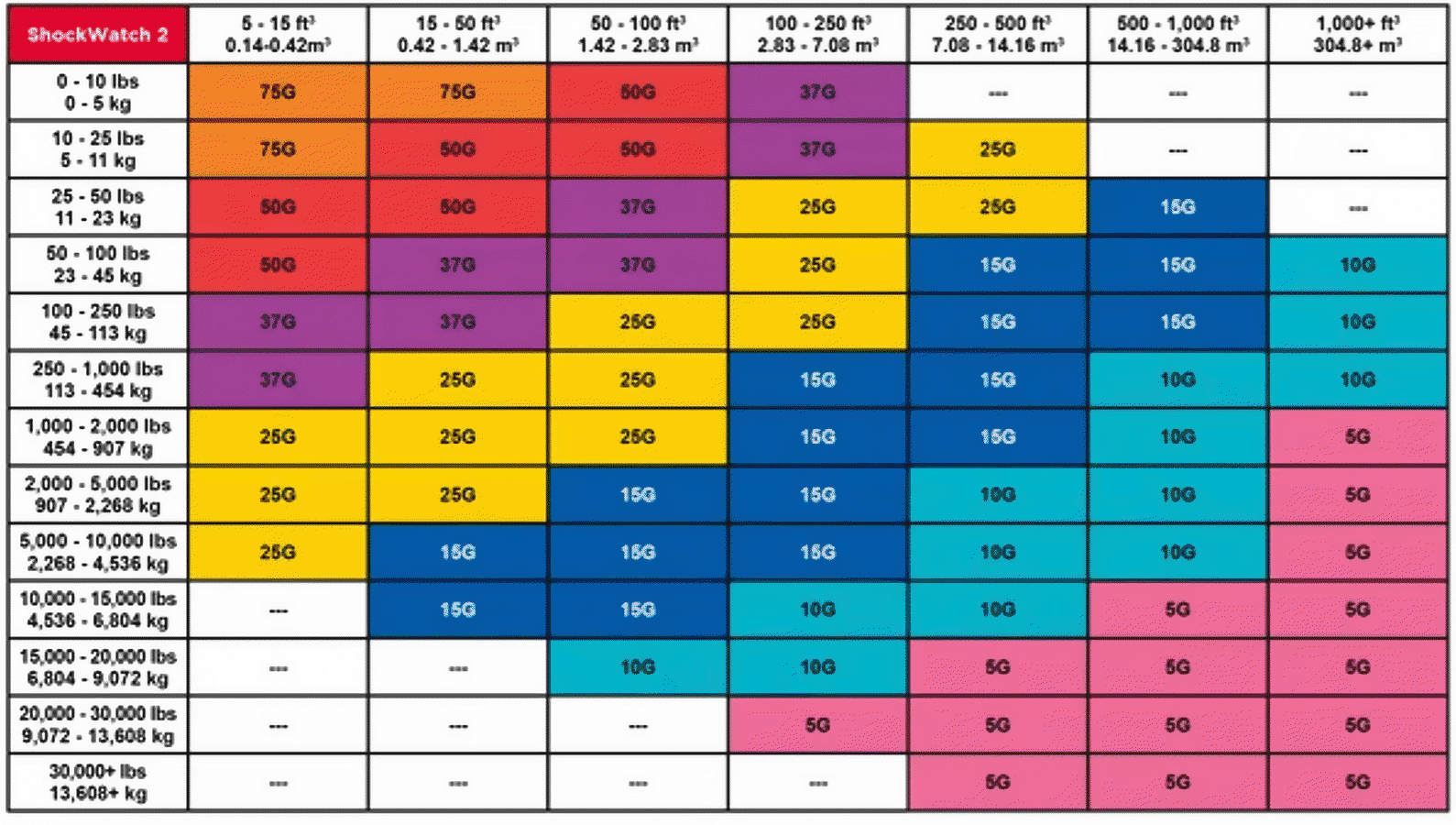
The starting point for selecting the right ShockWatch RFID indicator is the size of the package in cubic meters (L x W x H) and the total weight (including packaging) of your package. Select the weight range in the left-hand column and the volume range in the top line. Extend both fields with an "imaginary line" and read off the corresponding sensitivity value. The determined color field represents the respective g-value. Small delivery note sticker: Each Shockwatch label comes with a small delivery note sticker, which is included in the packaging of the Shockwatch indicators. Simply affix this to your delivery bill to provide an additional reference for checking the ShockWatch label on the package when the goods are accepted by the carrier or end customer.